




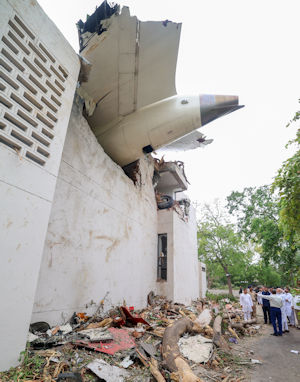
 The investigation into the crash of Air India Flight 171, which killed all but one person on board shortly after takeoff from Ahmedabad, has sparked intense controversy and debate. India’s Aircraft Accident Investigation Bureau (AAIB) is leading the probe into the Boeing 787 Dreamliner crash, supported by US experts.
A preliminary report noted that fuel cutoff switches were transitioned shortly after takeoff, leading to immediate speculation—fueled by media reports—that the pilot may have deliberately caused the crash. This "pilot suicide" theory has been met with strong resistance from pilots' groups, families of the victims, and safety campaigners. They argue that this narrative conveniently shifts blame away from the manufacturer and airline, pointing instead to potential technical malfunctions, such as deep-seated electrical failures or anomalies in the aircraft's systems, as the true cause.
The investigation has highlighted broader concerns regarding the independence and transparency of national-led accident inquiries, especially when large corporations and government interests are involved. Critics argue that the current system is outdated and vulnerable to political and corporate influence, prompting calls for more globalized, transparent, and independent investigation processes to ensure passenger safety and provide closure to grieving families.
https://www.bbc.co.uk/news/articles/cwyk9exxp2qo
img: Prime Minister's Office (GODL-India), GODL-India <https://data.gov.in/sites/default/files/Gazette_Notification_OGDL.pdf>, via Wikimedia Commons
 Almost 90 drones fell from the sky over Sydney's Darling Harbour during a popular winter light show, with footage showing devices splashing into the water, close to crowds. Organisers of Vivid Sydney, an annual three-week festival that features large light installations, said the malfunction on Monday evening, local time, was due to "an unforeseen change in the radio frequency environment occurring after take-off, and has cancelled several upcoming shows.
Footage of Monday's show captured dozens of drones as they tumbled out of the night sky, leaving bystanders confused by the aerial display.
Skymagic, the UK company behind the show, blamed a change in radio frequency for the glitch and said none of the drones fell outside safety boundaries.
"The sound of them crashing on the wharf was considerable even from probably 10 to 15 or 20 metres away; you could hear them physically crash and smash onto the cement marina," a Darling Harbour worker told the national broadcaster ABC.
https://www.bbc.co.uk/news/articles/c9d330wqq2zo
img: ID 122107220 © Bundit Minramun | Dreamstime.com
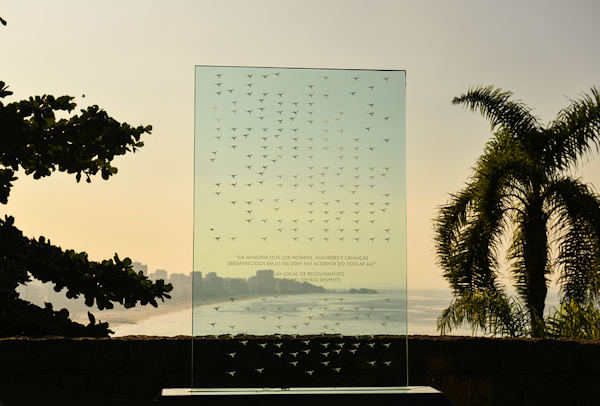 Air France and Airbus have been found guilty of manslaughter over a 2009 plane crash which killed 228 people.
The Paris Appeals Court found the airline and aircraft manufacturer "solely and entirely responsible" for the incident, in which flight AF447 from Rio de Janeiro to Paris crashed into the Atlantic Ocean. The passenger jet stalled during a storm and plunged into the water, killing all on board. All 12 crew members and 216 passengers on board the flight were killed when the plane crashed into the sea from a height of 38,000ft (11,580m), making it the deadliest incident in French aviation history.
A court had previously cleared the companies in April 2023, but they were found guilty on 21st May 2026 after an eight-week trial. Both have repeatedly denied the charges and say they will appeal.
The wreckage was located after a long search of 10,000 sq km (3,860 sq miles) of sea floor. But the flight recorder was not found until 2011, after months of deep-sea searches.
The companies have been asked to pay the maximum fine - €225,000 (£194,500) each.
https://www.bbc.co.uk/news/articles/czd2qmdvmq6o
img: ID 46389283 © Paura | Dreamstime.com
 Commercial aviation has never been safer. In 2025 alone, airlines operated almost 39 million flights worldwide, with the accident rate falling to roughly one accident for every 760,000 flights. For passengers, that is reassuring. For investigators and regulators however, it is creating an unexpected reporting problem. The IATA says too many investigations are failing to meet the standards set out in Annex 13 of the Chicago Convention – the international framework governing aircraft accident investigations.
Between 2019 and 2023, only 63% of accident investigations were completed in accordance with Annex 13 requirements. The remainder were delayed, incomplete, unpublished or failed to meet international reporting standards.
https://aerospaceglobalnews.com/news/aviation-accidents-misreported-iata
img: IATA, Public domain, via Wikimedia Commons
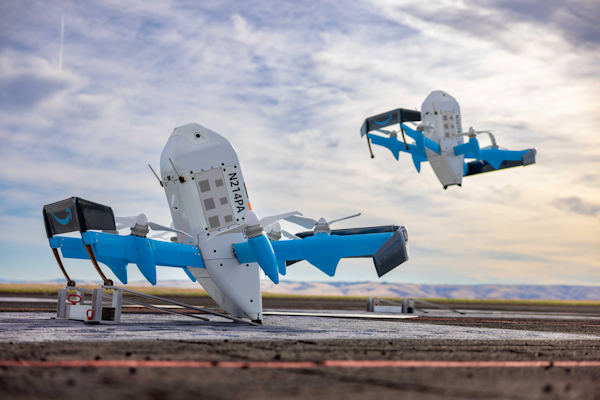 Amazon has officially launched its first UK drone delivery service in Darlington, County Durham, the only location outside of the US. The service delivers parcels weighing less than 5lb (2.2kg), such as batteries, beauty products, and cables. It currently operates within a 7.5-mile (12km) radius of Amazon’s fulfilment centre. Amazon is using its latest MK30 drone, which is autonomous and equipped with sensors to avoid obstacles like people, pets, and power lines. It drops packages from a height of about 12 feet onto the customer's property.
Darlington was chosen because it provides a mix of residential areas and complex airspace (near Teesside Airport) to test the technology's versatility. The service currently requires customers to have a garden or yard for the drop-off, making it unsuitable for high-rise buildings or dense urban centres at this stage.
The Civil Aviation Authority (CAA) has approved the trial until the end of the year, allowing Amazon to fly drones "beyond visual line of sight" (BVLOS).
https://www.bbc.co.uk/news/articles/cx21k21vnmgo
img: From Amazon Press Centre