




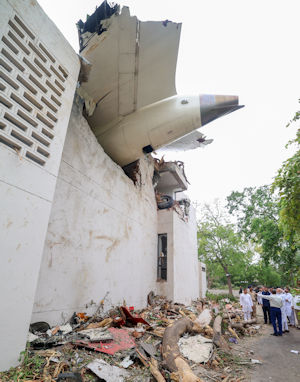
 The investigation into the crash of Air India Flight 171, which killed all but one person on board shortly after takeoff from Ahmedabad, has sparked intense controversy and debate. India’s Aircraft Accident Investigation Bureau (AAIB) is leading the probe into the Boeing 787 Dreamliner crash, supported by US experts.
A preliminary report noted that fuel cutoff switches were transitioned shortly after takeoff, leading to immediate speculation—fueled by media reports—that the pilot may have deliberately caused the crash. This "pilot suicide" theory has been met with strong resistance from pilots' groups, families of the victims, and safety campaigners. They argue that this narrative conveniently shifts blame away from the manufacturer and airline, pointing instead to potential technical malfunctions, such as deep-seated electrical failures or anomalies in the aircraft's systems, as the true cause.
The investigation has highlighted broader concerns regarding the independence and transparency of national-led accident inquiries, especially when large corporations and government interests are involved. Critics argue that the current system is outdated and vulnerable to political and corporate influence, prompting calls for more globalized, transparent, and independent investigation processes to ensure passenger safety and provide closure to grieving families.
https://www.bbc.co.uk/news/articles/cwyk9exxp2qo
img: Prime Minister's Office (GODL-India), GODL-India <https://data.gov.in/sites/default/files/Gazette_Notification_OGDL.pdf>, via Wikimedia Commons