




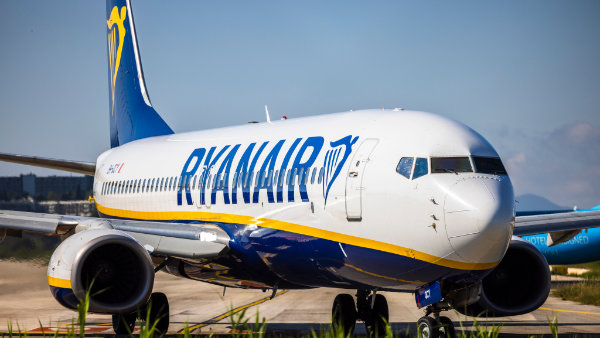
 Tracking data shows the plane was in the air for about 10 minutes when it abruptly descended 9,000ft (2,700m), with passengers telling local media they heard "some kind of explosion".
A Greek hospital official said a 61-year-old Serbian national was being treated for friction burns. "His wife held onto his legs for around five minutes to stop him from being sucked out," Michalis Giannakos said.
In a statement, Ryanair said its Friday morning flight from the Greek city of Thessaloniki to Germany's Memmingen returned "shortly after take-off when a passenger window dislodged in flight".
"The aircraft landed normally and passengers returned to the terminal. One passenger requested and received medical assistance on the ground in Thessaloniki," the Irish budget airline said.
It added that "a replacement aircraft was arranged to bring passengers to Memmingen" several hours later.
Passengers have told local media the man was left hanging head first out of the window as far as his shoulders before other passengers managed to pull him back inside.
Those on board have also said the window was smashed by pieces of the jet's engine - although Ryanair has not commented on this.
"We immediately realised there had been a decompression. There were screams... for a moment I thought someone had accidentally opened the emergency door," Christina, a fellow passenger, told Radio Thessaloniki.
"The masks dropped and there was a strong smell. The head and shoulders of one passenger were outside the window. Fortunately, he hadn't taken off his seat belt."
https://www.bbc.co.uk/news/articles/cgk65knkyzdo
img: id 2762852061, Karolis Kavolelis / Shutterstock.com
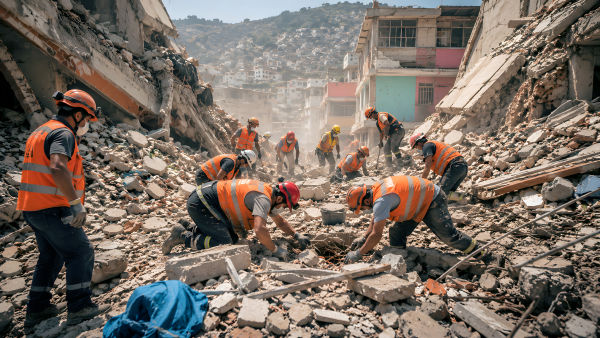 Following twin earthquakes in Venezuela that have killed at least 1,700 people, rescue teams are in a race against time to locate survivors trapped under rubble. Despite passing the critical 96-hour window where survival rates drop sharply, international and local search groups maintain day-one intensity using a multi-layered approach. These include:
- Trained search dogs that can detect human scent as far as 10m under rubble and find hard-to-navigate paths through rubble
- Rescue workers use sensitive listening devices that can pick up faint tapping, scratching or voices deep beneath collapsed structures
- Specialised cameras are threaded into tight gaps to visually inspect voids and micro drones - nicknamed "cockroach drones" - are also being used on the ground
While the physical window for easy rescue has closed, search and rescue experts emphasize that individuals can survive much longer if they have access to air pockets and water. Teams continue meticulously digging through collapsed buildings, balancing heavy machinery with delicate manual tools to avoid further shifts in the rubble, driven by the lingering hope of finding more survivors alive.
https://www.bbc.co.uk/news/articles/cn75jk07y5do
img: Einsatzkräfte nach verheerendem Erdbeben in Venezuela von Marco Verch unter Creative Commons 4.0
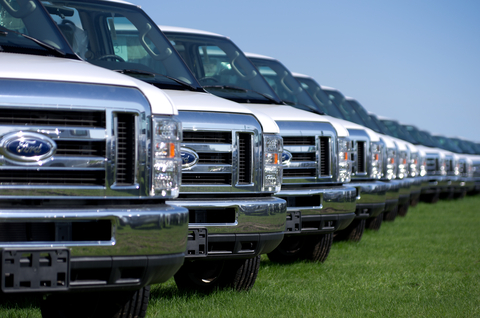 Ford says it has hired back some human engineers after AI failed to match their skills and experience. In a bid to reap the benefits of the tech, which developers claim can cut costs and boost productivity, the US carmaker adopted it across some parts of its operations including for quality checks. But, according to Bloomberg, its executives said the firm has rehired more than 300 "veteran" quality inspectors in recent years to make up for the pitfalls of automated systems.
"Artificial intelligence is a fantastic tool, but it's only as good as the information you use to train it," Charles Poon, vice president of vehicle hardware engineering, told reporters. Over prior years, we didn't pay as much attention as we should have to the experience of our most knowledgeable engineers that have been with us through many product cycles," he said.
The US automaker is among many to have seized on the buzz around AI, particularly amid Wall Street fervour about the tech's potential to increase margins. "AI will leave a lot of white collar people behind," Ford boss Jim Farley said in an interview with author Walter Isaacson last June. In an October earnings call, external, chief operating officer Kumar Galhotra said the firm was "deploying AI across the entire industrial system". This included rolling out 900 AI-powered cameras in its plants "to detect quality issues at the source and help us mitigate supply disruptions", Galhotra told investors.
But Poon told reporters on Wednesday the firm's AI-driven checks had failed to live up to expectations. "Mistakenly, we thought that by just introducing artificial intelligence and ingesting the design requirements that we had, that would produce a high-quality product," he said.
https://www.bbc.co.uk/news/articles/cgrkd41n2v9o
img: ID 40452208 | Ford Assembly Line © Driftinglight | Dreamstime.com
 A fatal crash involving a Tesla that drove into a home is being investigated by the US auto safety regulator. The National Highway Traffic Safety Administration (NHTSA) opened a formal inquiry on Monday into the accident that occurred on 19 June 2026 in Texas, in which a Tesla sped off the road into a house.
A woman who was inside the property was severely injured and died as a result, according to a report of the incident from local police.
Police said the driver was not intoxicated, and he told investigators that the vehicle was operating with an automated driving assistance system at the time of the crash.
The fatal crash occurred around 20:00 local time. The driver of a Tesla Model 3 "failed to drive in a single lane, left the roadway, and struck the residence", the police report stated. In a statement given to local media the night of the crash, Sergeant Alex Turman of the Harris County Sheriff's Office said the vehicle "failed to turn right at an intersection and, at a high rate of speed, crashed directly into a house".
The 76-year-old woman who was inside the home was struck in the crash and was taken to a hospital, but she died of her injuries, the officer added.
https://www.bbc.co.uk/news/articles/c07yp02mxyjo
img: Photo 93770553 © Helgidinson | Dreamstime.com
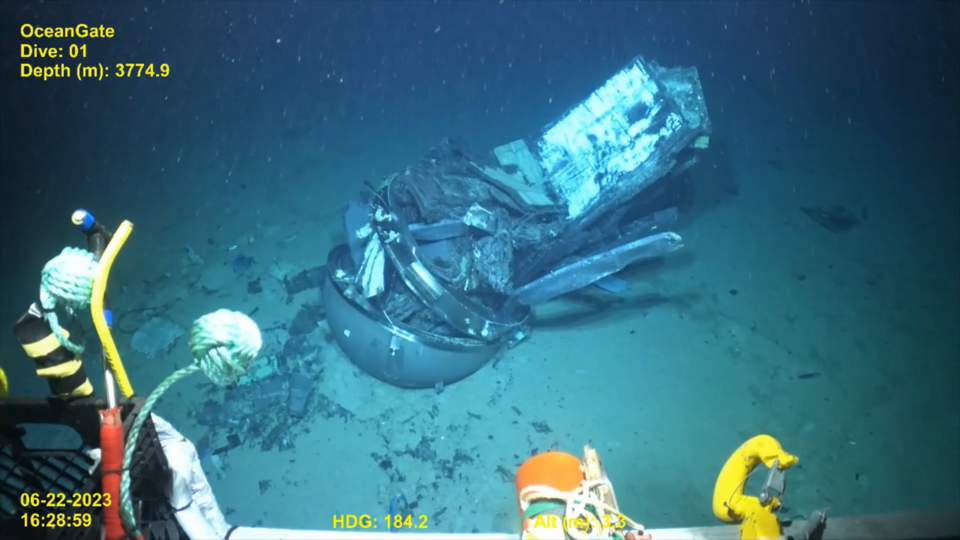 The Transportation Safety Board (TSB) of Canada has completed its investigation of the 2023 Titan Implosion and published a report on 17th June 2026.
On 18 June 2023, the submersible Titan, with 5 people on board, was descending to the wreck of the Royal Mail Ship Titanic, located 372 nautical miles south-southeast of Cape Race, Newfoundland and Labrador. The Titan was owned by the U.S. based company OceanGate.
The Titan was being supported by a Canadian cargo vessel, the Polar Prince, which was being used to tow the Titan to and from dive locations, as well as providing a base for OceanGate’s operations. During the Titan’s descent, an OceanGate surface support team aboard the Polar Prince was tracking the Titan and maintaining communication. Approximately 1 hour and 45 minutes after the Titan began its descent, the surface support team lost all contact with it. A search and rescue operation was initiated later that evening. On 22 June, the U.S. Coast Guard confirmed that the wreckage of the Titan had been found on the ocean floor near the Titanic. There were no survivors.
The Titan’s pressure hull consisted of a carbon fibre cylinder that was capped at either end by titanium domes. The use of carbon fibre in a pressure hull for a human-occupied submersible intended for deep-ocean diving is novel; submersibles used for deep-ocean diving are typically constructed of steel or titanium. As well, the pressure hull is typically spherical, not cylindrical, because this is the best shape for resisting external pressure and allowing even distribution of stresses.
The investigation determined that the as-built properties of the Titan’s carbon fibre cylinder were never validated to ensure they met the theoretical values used in the design process and that the construction and testing of the Titan did not follow standard engineering practices. As a result, OceanGate did not know for how long the Titan’s pressure hull would remain structurally intact when used repeatedly for dives to the depth of the Titanic.
In an attempt to mitigate this problem, OceanGate had developed two systems to monitor the integrity of the pressure hull: a strain monitoring system and an acoustic monitoring system. The strain monitoring system provided data for post-dive analysis to identify potential problems with the pressure hull that could lead to failure on a subsequent dive. However, analysis of the strain data by OceanGate was inconsistent and did not result in the pressure hull being removed from service before its failure. The acoustic emission monitoring system was being relied on to provide enough advance warning for the submersible to surface in the event of an impending hull failure. However, this system had not been tested to demonstrate that it would consistently provide enough advance warning, and it did not function as intended during the occurrence.
Analysis by the TSB Laboratory determined that the reduced compressive strength of the Titan’s carbon fibre cylinder, as well as defects that were potentially introduced during manufacturing, operations, storage, and transport of the Titan, likely led the cylinder to fail progressively, due to damage accumulating during each dive cycle, until it imploded.
The investigation found that risk management at OceanGate was hindered by the structure and composition of the company as well as by the influence of power dynamics and social and psychological factors. As a result, OceanGate did not identify and mitigate key risks associated with the structural integrity of the Titan. Also, the investigation looked at issues relating to oversight of submersible operations, emergency response preparedness for submersibles, and safety management as it relates to groups working on a vessel.
The investigation identified safety deficiencies related to oversight and standards that led the Board to issue 6 recommendations.
https://www.tsb.gc.ca/eng/enquetes-investigations/marine/2023/m23a0169/m23a0169.html
img: Public Domain